
Lawn Aeration and Overseeding in Hickory, NC
Catawba Valley soil is red clay, and clay packs down hard. Foot traffic, mowing, and summer storms press it tighter every year until water runs off instead of soaking in and grass roots stay shallow. Core aeration opens the soil back up, and overseeding right behind it is the single best way to thicken a thin fescue lawn in Hickory.
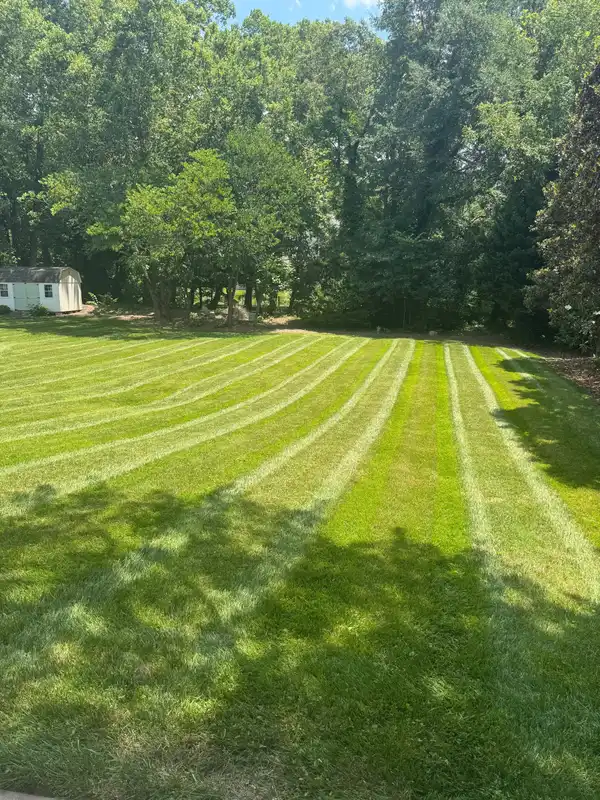
What core aeration does
A core aerator pulls thousands of small plugs of soil out of the lawn, each a couple of inches deep. The holes let air, water and fertilizer reach the root zone, and they give the soil room to loosen as the plugs break down on the surface over the next week or two. We use a core aerator, not a spike aerator. Spiking just pushes holes into the ground and can compact clay even further around each hole.
Before we aerate, mark sprinkler heads, invisible fence lines, and shallow cable or irrigation runs, or tell us where they are and we will flag them. Aeration works best when the soil is moist but not soaked, so we usually schedule a day or two after a good rain.
Why September and October
Tall fescue is a cool-season grass, and fall is its growing season. In the Catawba Valley, mid September through October is the window to aerate and overseed fescue. The soil is still warm enough for seed to germinate in about 7 to 14 days, the air is cooling off, and the new grass has the whole fall and the next spring to root in before July heat arrives. Fescue seeded in spring often looks good in May and dies in August.
Warm-season lawns such as bermuda and zoysia are the opposite. They are aerated in late spring or early summer while they are actively growing, and they are not overseeded with fescue. We will tell you which one you have if you are not sure.
Seed, watering and aftercare
We overseed with a quality turf-type tall fescue blend suited to our heat and humidity, spread right after aeration so the seed falls into the holes and gets good soil contact. After seeding, the lawn needs light watering once or twice a day for the first two to three weeks, enough to keep the top of the soil damp, then less often and deeper as the new grass fills in. Hold off mowing until the new blades reach mowing height, and keep leaves off the lawn during a fall cleanup so the seedlings get light.
Aeration and seeding has to be planned with weed control. Most pre-emergent products stop grass seed from sprouting too, so fall pre-emergent is skipped on lawns being overseeded, and spring seeding conflicts with crabgrass prevention. That timing is one reason fall is the right season.
How aeration and seeding is priced
Aeration and overseeding is priced per job, based on the square footage of the lawn, with seed included. We can add a starter fertilizer and a lime application if your soil test calls for it. Many customers book it every fall as part of a yearly lawn treatment program.
Aeration and Overseeding questions
When should I aerate and overseed my lawn in Hickory?
For tall fescue, mid September through October. Bermuda and zoysia lawns are aerated in late spring or early summer and are not overseeded with fescue.
How often should a lawn be aerated?
Once a year is right for most Catawba Valley lawns because of our clay soil. Lawns with heavy foot traffic or bare, packed areas benefit the most.
How much should I water after overseeding?
Water lightly once or twice a day for the first two to three weeks to keep the top of the soil damp, then water less often and more deeply as the grass fills in.
What do I do with the soil plugs?
Leave them on the lawn. They break down in a week or two, and the soil they return helps the lawn.
Where we offer aeration and overseeding
Related services
- Lawn RestorationA step-by-step plan to bring back lawns that are thin, weedy, or damaged by another company.
- Lawn TreatmentsFertilizer, lime and pre-emergent on a schedule built for fescue and clay soil.
- Weed ControlLicensed pre-emergent and post-emergent spraying for crabgrass, clover, dandelions and nutsedge.