
Lawn Fertilization and Treatments in Hickory, NC
A lawn treatment program is the feeding side of lawn care: fertilizer, lime, and pre-emergent weed prevention, each put down at the time of year the grass can use it. Most Hickory lawns are tall fescue on acidic clay, and a program built for that combination looks different from the four-step bag schedule sold at the big box store.
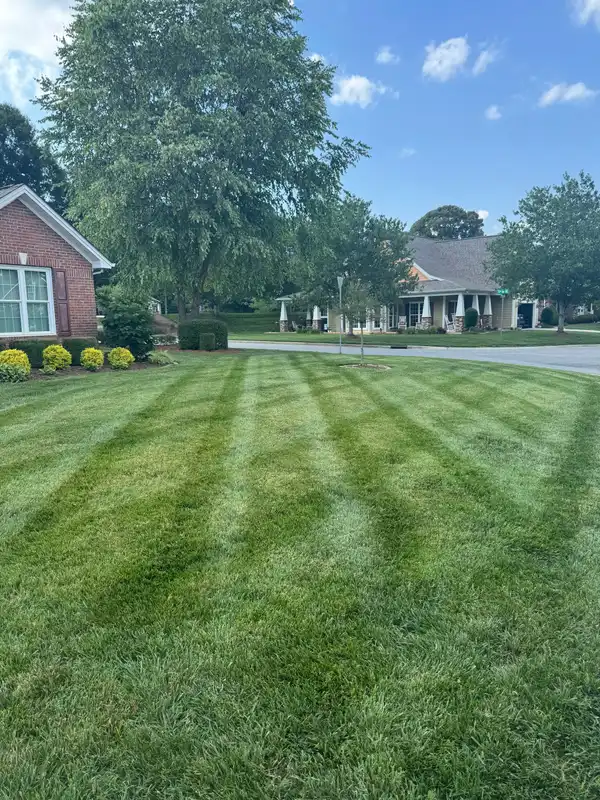
Fertilizing fescue: feed in fall, go easy in spring
Tall fescue does most of its root growth in the fall, so that is when it gets most of its nitrogen. A typical program here puts down fertilizer in September and again in October or November, with a lighter feeding in late winter or early spring. Heavy spring nitrogen pushes fast top growth that has to be mowed off and leaves the lawn weaker going into summer. Summer fertilizer on fescue invites brown patch, the fungus that causes those round tan patches in July and August humidity. Bermuda and zoysia lawns follow the opposite calendar and are fed in late spring and summer while they are growing.
We use slow-release products so the grass gets a steady supply instead of a surge, and we adjust rates for shade, slopes, and newly seeded areas.
Lime and soil testing
Most soil in the Catawba Valley is naturally acidic. When pH drops too low, grass cannot take up the nutrients that are already in the soil, and fertilizer is partly wasted. Lime raises the pH back into the range fescue prefers. We recommend a soil test through the NC Department of Agriculture and Consumer Services, then lime at the rate the test calls for. Lime works slowly, so fall and winter applications are ideal.
Pre-emergent and weed prevention
Treatment programs include pre-emergent crabgrass prevention: the first application in February or March, before the soil warms into the mid 50s, and a second in late spring to hold the barrier through summer. Broadleaf weeds that come through are handled by our licensed weed control spraying. A thick, well-fed lawn is the best weed prevention there is, because weeds need bare soil and sunlight to get started.
If you plan to aerate and overseed in the fall, we skip fall pre-emergent on those areas so the new seed can sprout.
What we watch for on every visit
A treatment visit is also an inspection. We look for the round tan patches of brown patch in summer, the irregular dead areas and easy-lifting turf that point to grubs, thin spots under trees where shade is winning, and pale, slow-growing areas that suggest a pH or drainage problem. When we see something, we tell you what it is and what we recommend, rather than adding products you do not need.
Watering matters as much as feeding. Established fescue needs about an inch of water a week in summer, from rain or irrigation, applied in one or two deep waterings early in the morning rather than a little every evening. Evening watering keeps the grass wet overnight and is one of the fastest ways to invite disease in our humid Julys.
How the program is priced
Treatments are sold as a seasonal program, priced per application and based on the square footage of the lawn. You get the full year's schedule up front, and we leave a note after each visit with what was applied. You can add or drop services as the lawn changes. If the lawn is in rough shape to begin with, we may recommend starting with lawn restoration before settling into a maintenance program.
Lawn Treatments questions
When should a fescue lawn be fertilized in Hickory?
Mainly in the fall, in September and again in October or November, with a lighter feeding in late winter or early spring. Avoid fertilizing fescue in summer.
Does my lawn need lime?
Most Catawba Valley soil is acidic, so many lawns do. A soil test through the NC Department of Agriculture and Consumer Services tells you exactly how much.
What is pre-emergent?
A treatment that stops weed seeds like crabgrass from sprouting. It goes down in February or March, with a second application in late spring.
How is a lawn treatment program priced?
Per application, based on the square footage of the lawn. You get the full season's schedule and cost up front.
Where we offer lawn treatments
Related services
- Weed ControlLicensed pre-emergent and post-emergent spraying for crabgrass, clover, dandelions and nutsedge.
- Aeration and OverseedingCore aeration and fescue overseeding in September and October to thicken thin lawns.
- Lawn MowingWeekly or every-other-week mowing with trimming, edging, and cleanup on every visit.