
Mulch, Pine Straw and Bed Edging in Hickory, NC
Fresh mulch is the quickest way to make a property look cared for, and it does real work for your plants. A proper layer holds moisture through a dry Hickory August, keeps roots cooler, and blocks a lot of weed seed from ever reaching the soil. Done wrong, piled against trunks or dumped over last year's weeds, it causes more problems than it solves. We do it the right way.
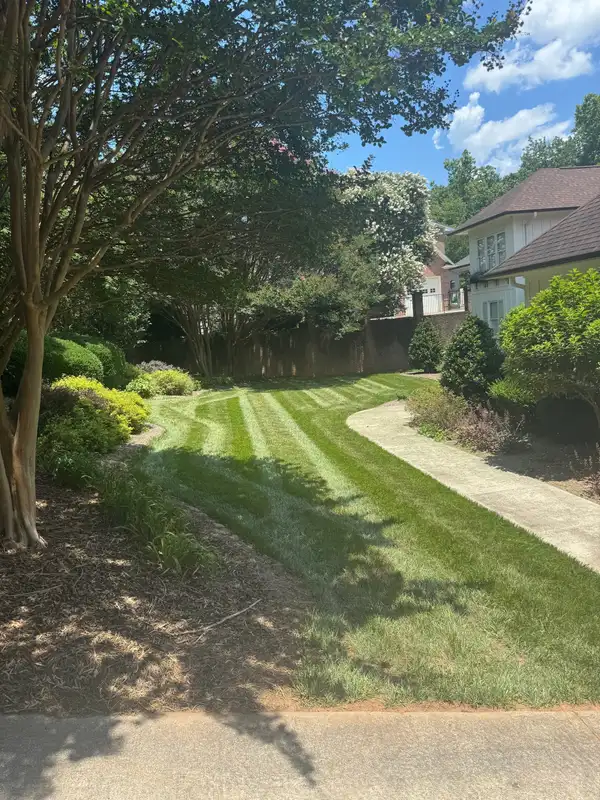
What a mulching job includes
We start by cleaning out the beds: pulling weeds, clearing leaves and sticks, and cutting back anything dead. Then we cut a fresh edge between the lawn and the bed, a clean vertical cut that keeps grass from creeping in and gives the mulch something to sit behind. Only then does new material go down.
We spread mulch to an even 2 to 3 inches. Less than that and weeds come through; more than that and water and air struggle to reach the roots. We keep mulch pulled back from tree trunks and shrub stems. The volcano-style mounds you see around trees in parking lots trap moisture against the bark and invite rot and insects, and we do not build them.
Hardwood mulch or pine straw
Both are common in the Catawba Valley, and both work. Double shredded hardwood mulch, natural or dyed brown or black, gives a finished, uniform look and knits together so it stays put on gentle slopes. Pine straw is the traditional choice across North Carolina: it is light, lets water through easily, and holds up well on steeper banks where wood mulch can wash out in a summer storm. On sloped lots in Granite Falls and along Lake Hickory, pine straw is often the better call. We will recommend one after seeing the property, and we can match what you already have.
When to mulch in Hickory
Spring, from March into May, is the most popular time. The beds get a fresh start before summer heat, and the new layer is in place before weed seed germinates. Fall is the second window. A fall layer insulates roots through winter and pairs well with a fall cleanup. Most beds need a top-up once a year; hardwood breaks down faster in shade and wet spots, and pine straw fades and settles through the season.
Mulch does not replace weed control in the beds, but it cuts the work down a lot. Customers on our weed control program can have bed weeds handled on the same visits.
Mulch around the house
Beds along the foundation need a little extra care. We keep mulch and pine straw a few inches below siding and weep holes and pulled back from the foundation itself, so the material does not hold moisture against the house or give insects an easy path inside. We also keep mulch from burying the crowns of shrubs and perennials. If your beds have built up years of old mulch until they sit higher than the lawn, we can pull some of it out before adding a fresh top layer.
How mulching is priced
Mulching is priced per job, based on the number and size of the beds, the material you choose, and how much cleanout the beds need first. Estimates are free. If you are already on a mowing schedule with us, we can fit mulching into a regular visit.
Mulching questions
How deep should mulch be?
An even 2 to 3 inches. Less lets weeds through, and more can starve roots of water and air. Mulch should be kept pulled back from trunks and stems.
Should I use pine straw or hardwood mulch?
Both work well here. Hardwood mulch gives a uniform, finished look on flat beds. Pine straw is lighter and stays in place better on steep slopes.
When is the best time to mulch in Hickory?
Spring, from March into May, is the most popular window. Fall is the second best time and helps insulate roots through winter.
Do you remove the old mulch first?
We clean out weeds, leaves and debris and cut a fresh edge before new material goes down. Old mulch that has broken down is usually left as a base unless it is too deep.